
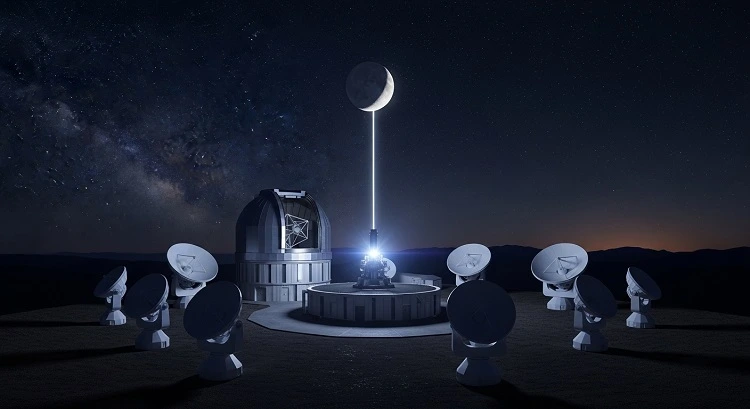
The phrase china moon laser targeting has recently sparked global attention, raising questions about space technology, lunar missions, and potential military applications. Reports and discussions surrounding laser systems aimed at the Moon often blend scientific research with strategic speculation.
In this comprehensive article, we break down what china moon laser targeting actually refers to, the role of lunar laser ranging, China’s space capabilities, and the broader implications for global space security.
What Is China’s Moon Laser Targeting?
When people search for China Moon laser targeting, they are usually referring to one of two possibilities:
- Scientific lunar laser ranging experiments
- Speculation about space-based military laser systems
China operates advanced ground-based laser facilities used for satellite tracking and lunar measurement. These systems are part of legitimate space research programs. However, concerns arise when laser technology intersects with space defense and anti-satellite capabilities.
Understanding the difference between scientific measurement and military targeting is essential.
Lunar Laser Ranging and Space Science
What Is Lunar Laser Ranging?
Lunar laser ranging is a scientific technique used to measure the distance between Earth and the Moon with extreme precision. Powerful lasers are fired at retroreflectors placed on the lunar surface by past space missions. The time it takes for the laser beam to return determines the exact distance.
This method supports:
- Orbital mechanics research
- Earth rotation studies
- Gravitational physics experiments
- Long-term lunar mapping
China has developed an advanced lunar observation infrastructure to support its expanding space exploration program.
China’s Lunar Exploration Program
China’s lunar program includes robotic missions, orbiters, and sample return missions. Laser tracking plays a critical role in guiding spacecraft and collecting scientific data.
Ground-based laser stations assist with:
- Tracking lunar orbiters
- Calibrating navigation systems
- Conducting deep space communication experiments
In this context, china moon laser targeting may simply describe advanced scientific measurement activities.
Space Surveillance and Satellite Tracking
Laser systems are also widely used in space situational awareness programs.
Satellite Laser Tracking Technology
China operates satellite laser ranging facilities capable of:
- Monitoring orbital debris
- Tracking satellites
- Measuring precise orbital positions
These systems improve accuracy in navigation and reduce collision risks.
Dual Use Technology Concerns
Many space technologies have dual-use potential. While designed for research or tracking, high-powered lasers theoretically could be adapted for other purposes. This dual-use nature fuels discussions about china moon laser targeting in security circles.
It is important to distinguish verified scientific activity from unconfirmed speculation.
Military and Strategic Implications
The conversation around china moon laser targeting often shifts toward defense analysis.
Anti-Satellite Capabilities
Some analysts debate whether advanced laser systems could disrupt or disable satellites. Laser-based counter-space systems could theoretically interfere with:
- Optical sensors
- Satellite communications
- Surveillance systems
However, there is limited publicly confirmed evidence of operational lunar targeting weapons.
Space Security Competition
Global powers are investing in:
- Space defense technologies
- Satellite resilience systems
- Counter space monitoring
As nations expand their space programs, concerns about weaponization increase. The issue is not limited to one country. It reflects broader geopolitical tensions in orbit and beyond.
International Law and Space Treaties
Outer space activities are governed by international agreements.
The Outer Space Treaty
The Outer Space Treaty prohibits the placement of weapons of mass destruction in orbit or on celestial bodies. However, it does not explicitly ban all military-related technologies in space.
This legal gray area leaves room for debate over what constitutes aggressive targeting versus scientific tracking.
Transparency and Confidence Building
Calls for greater transparency in space activities continue to grow. Confidence-building measures such as shared data, inspections, and multilateral agreements could reduce misunderstandings about china moon laser targeting activities.
Technological Capabilities Behind Lunar Laser Systems
Understanding the engineering behind laser systems clarifies the discussion.
High Energy Laser Infrastructure
Advanced laser facilities typically include:
- Precision optical telescopes
- High-powered pulsed lasers
- Adaptive optics systems
- Real-time atmospheric correction technology
These systems require sophisticated engineering and significant funding.
Deep Space Communication Integration
Laser communication technology is also being developed to transmit data between Earth and deep space missions. Laser-based communication offers higher bandwidth compared to traditional radio frequency systems.
China’s investment in these technologies aligns with its broader space modernization strategy.
Public Perception and Media Narratives
Media coverage can amplify concerns without a clear technical context.
Sensational Headlines vs Scientific Reality
Headlines mentioning lasers and the Moon may create dramatic interpretations. In many cases, the activity involves routine scientific measurement rather than active targeting in a military sense.
Understanding terminology is crucial. Laser ranging and laser targeting are not always synonymous.
The Role of Geopolitics
Geopolitical competition often shapes how technological developments are interpreted. Space infrastructure expansion is viewed through a strategic lens, particularly among major global powers.
The phrase china moon laser targeting reflects both technological progress and geopolitical sensitivity.
Future of Lunar Infrastructure
Looking ahead, lunar development is accelerating.
Permanent Lunar Presence
Nations are planning:
- Lunar research stations
- Surface exploration missions
- Resource utilization projects
Laser tracking and communication systems will be critical to supporting these initiatives.
Space Domain Awareness Expansion
Improved monitoring of objects in orbit and beyond will require more advanced sensing technology, including laser-based systems.
This suggests that discussion around china moon laser targeting will likely continue as lunar exploration intensifies.
Frequently Asked Questions
Is China targeting the Moon with military lasers?
There is no publicly confirmed evidence of operational lunar laser weapons. Most known activities relate to scientific research and satellite tracking.
Why are lasers used in space programs?
Lasers provide extremely precise distance measurement and communication capabilities, making them valuable for lunar exploration and satellite tracking.
Are other countries using similar technology?
Yes. Several countries operate lunar laser ranging stations and satellite laser tracking systems as part of their space research programs.
Conclusion
The topic of china moon laser targeting sits at the intersection of science, technology, and geopolitics. While laser systems aimed at the Moon are primarily associated with scientific measurement and satellite tracking, strategic interpretations often fuel broader debates about space security.
As global investment in lunar exploration grows, transparency and international cooperation will play a key role in maintaining trust. Understanding the technical realities behind laser systems helps separate scientific advancement from speculation.
The future of space development will depend not only on technological capability but also on diplomatic clarity and responsible governance.