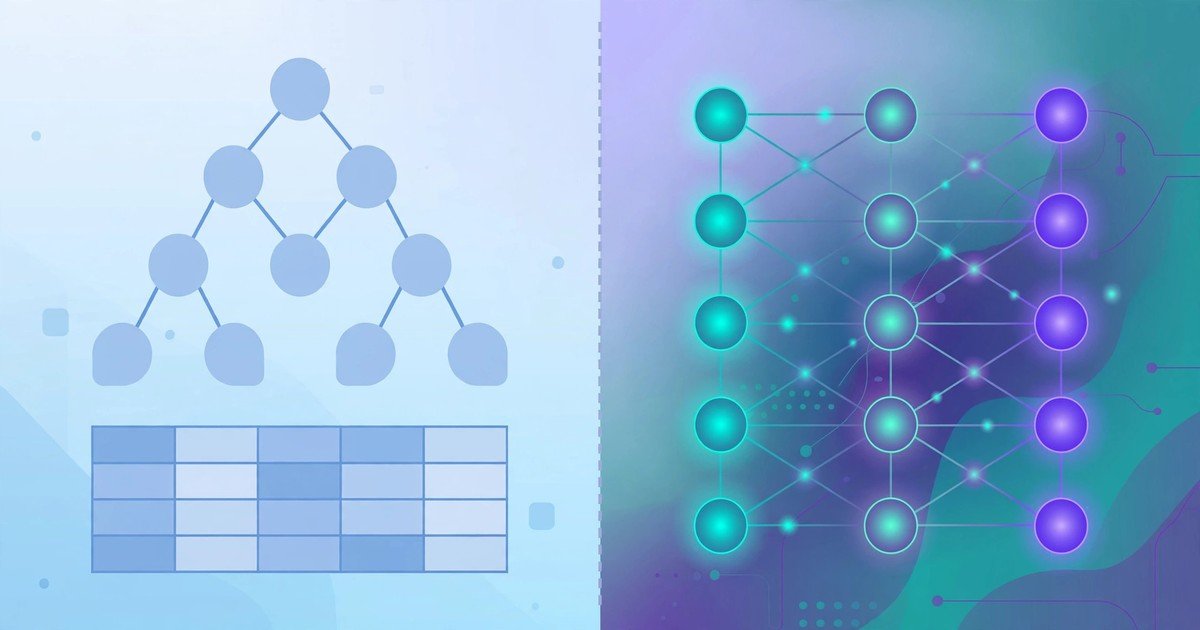
Machine learning vs deep learning: deep learning is a type of machine learning. Machine learning is the wider field. Deep learning is one branch of it, and it uses layered neural networks to learn from raw data. If you remember one thing from this guide, remember the nesting dolls. Artificial intelligence is the biggest doll. Machine learning sits inside it. Deep learning sits inside machine learning.
The two terms get mixed up a lot. News stories, product pages and job adverts use them as if they mean the same thing. They do not. The difference matters because it decides which tool fits a job, how much data you need and how much computing power a project will cost. This guide explains both in plain English, compares them side by side and shows which one powers the AI tools you already use.
The one-sentence difference
Machine learning lets a computer learn patterns from data instead of following fixed rules written by a programmer. Deep learning does the same thing, but it uses multi-layered neural networks that find the patterns themselves, even in messy data like photos, speech and video.
Think of it like cooking. A machine learning recipe tells the cook exactly which ingredients matter and how to combine them. A deep learning cook tastes the dish, works out which flavours matter and adjusts the recipe on its own. Both can produce a good meal. The second cook needs far more practice dishes before it gets good.
That is the core trade-off. Machine learning needs a human to pick out the useful features in the data. Deep learning skips that step, but it needs much more data and far more computing power to do so.
What is machine learning?
Machine learning is a way of building software that improves with experience. You feed the system examples, and it finds the patterns in them. Once trained, it can predict outcomes or sort new data it has never seen before.
Most machine learning falls into two broad types. Supervised learning trains on labelled examples, such as emails already marked as spam or not spam. The model learns the signs of spam and applies them to new mail. Unsupervised learning looks for structure in data with no labels at all, such as grouping customers by buying habits.
The important detail is feature engineering. A person decides which features of the data matter. For a house price model, a person might choose the number of bedrooms, the location and the floor area. For a fraud detection model, a person might choose the transaction size, the time of day and the country. The model then learns how those chosen features relate to the answer.
Everyday examples of machine learning are everywhere. Email spam filters use it. Product recommendations on shopping sites use it. Banks use it to flag unusual card transactions. Weather apps use it to predict rain. None of these need a neural network. They run well on ordinary computers and on modest amounts of data, and a small team can build and maintain them.
What is deep learning?
Deep learning is machine learning built on artificial neural networks with many layers. Each layer learns a different level of detail. In an image system, the first layers might detect edges and colours. The middle layers might detect shapes such as eyes and wheels. The final layers might recognise a whole face or a car. The network learns all of this from the raw data, with no human telling it which features to look for.
The word “deep” refers to the number of layers. A network with dozens or even hundreds of layers can learn very complex patterns. That is why deep learning handles unstructured data so well. Text, photos, audio and video do not come in neat rows and columns, and classic machine learning struggles with them. Neural networks do not.
The best known example is the large language model behind tools such as ChatGPT, Claude and Gemini. These models are deep neural networks trained on vast amounts of text. They read text in small chunks called tokens, predict the next chunk and build up fluent answers. Voice assistants, face unlock on phones, medical scan analysis and self-driving car vision systems all rely on deep learning too.
Deep learning has one famous turning point. In 2012, a deep learning model won the ImageNet image recognition contest by a wide margin over traditional methods. That result convinced the whole field that layered neural networks could beat hand-built features, and research funding and interest followed.
Machine learning vs deep learning: side by side
| Machine learning | Deep learning | |
|---|---|---|
| What it is | The wider field: software that learns patterns from data | A branch of machine learning that uses layered neural networks |
| Data needed | Works well on small to medium data sets | Needs large amounts of data to perform well |
| Feature selection | A human picks the useful features | The network finds the features itself |
| Best data type | Structured data such as spreadsheets and tables | Unstructured data such as images, text, audio and video |
| Computing power | Runs on a normal CPU | Usually needs a powerful GPU to train |
| Training time | Minutes to hours | Hours to weeks for large models |
| Accuracy | Good for clear, well defined problems | Often higher on complex problems, once trained on enough data |
| Examples | Spam filters, recommendations, fraud detection, price prediction | Chatbots, image recognition, voice assistants, translation |
| Explainability | Easier to explain why it made a decision | Harder to explain: the network is a “black box” |
Which one powers the AI tools you use?
Most of the AI tools people talk about in 2026 run on deep learning. Chatbots, image generators, voice cloning tools and video generators are all built on large neural networks. That is the world of generative AI, and it would not exist without deep learning.
But the quieter tools in daily life still run on classic machine learning. Your email spam filter, the “customers also bought” panel on a shopping site, your bank’s fraud alert and the demand forecast behind a supermarket’s stock levels are usually machine learning models. They are cheaper, faster to train and easier to explain than a neural network, so businesses keep using them where they work well.
The practical lesson is simple. If the input is a table of numbers, classic machine learning is usually the right choice. If the input is a photo, a voice clip or a paragraph of text, deep learning is usually the right choice. Many real products mix both. A shopping app might use classic machine learning to predict what you will buy and deep learning to recognise a product from a photo you upload.
Which should you learn first?
If you are learning AI as a beginner, start with machine learning. The ideas are easier to grasp, you can build working projects on a normal laptop and you will understand the core concepts, such as training data, features and accuracy, that deep learning builds on. Free tools such as scikit-learn and Google Teachable Machine make it easy to train a first model in an afternoon.
Move on to deep learning once you are comfortable with the basics and you have a problem that needs it, such as image classification or text generation. Frameworks such as TensorFlow and PyTorch are the standard tools, and free courses from providers such as Coursera cover the foundations. You do not need a maths degree to start, but you will need patience: deep learning models take longer to train and longer to debug.
For most UK workers, though, the useful skill is not building models at all. It is knowing which type of AI sits behind a tool, so you can judge what it can and cannot do, and choose the right tool for the job.
Frequently asked questions
Is deep learning better than machine learning?
Not always. Deep learning wins on complex problems with lots of unstructured data, such as images and language. Machine learning wins on smaller, structured problems because it is faster, cheaper and easier to explain. The right choice depends on the data and the job.
Is ChatGPT machine learning or deep learning?
Both. ChatGPT is a deep learning model, and deep learning is a type of machine learning. It is built on a transformer neural network trained on huge amounts of text.
Do I need a powerful computer for deep learning?
To train a large model from scratch, yes. You normally need a GPU or cloud computing. To use a trained model, or to fine tune a small one, a normal laptop is often enough, and many cloud tools offer free tiers for learners.
Can machine learning work without deep learning?
Yes. Machine learning existed for decades before deep learning became practical. Spam filters, recommendation engines and fraud detection still use classic machine learning today, and they work well.
What is an example of deep learning in everyday life?
Face unlock on your phone, voice assistants such as Siri and Alexa, photo search in Google Photos, live captions on video calls and the chatbot you ask questions to are all deep learning in daily use.
Conclusion
Machine learning is the wider field. Deep learning is its most powerful branch. Machine learning learns patterns from structured data with human help. Deep learning learns them itself from raw data, using layered neural networks, but it needs far more data and computing power to do so.
You do not need to pick a side. The AI tools you use every day already mix both. The value of knowing the difference is practical: it tells you why a chatbot can write a fluent essay but still make things up, why a spam filter is fast and cheap, and why image recognition took off only once neural networks had enough data to learn from. Start with machine learning to learn the foundations, then explore deep learning when you meet a problem that needs it.